

New Acquisitions
For more information about how you can support the activities of The Museum at FIT, please visit Support MFIT.
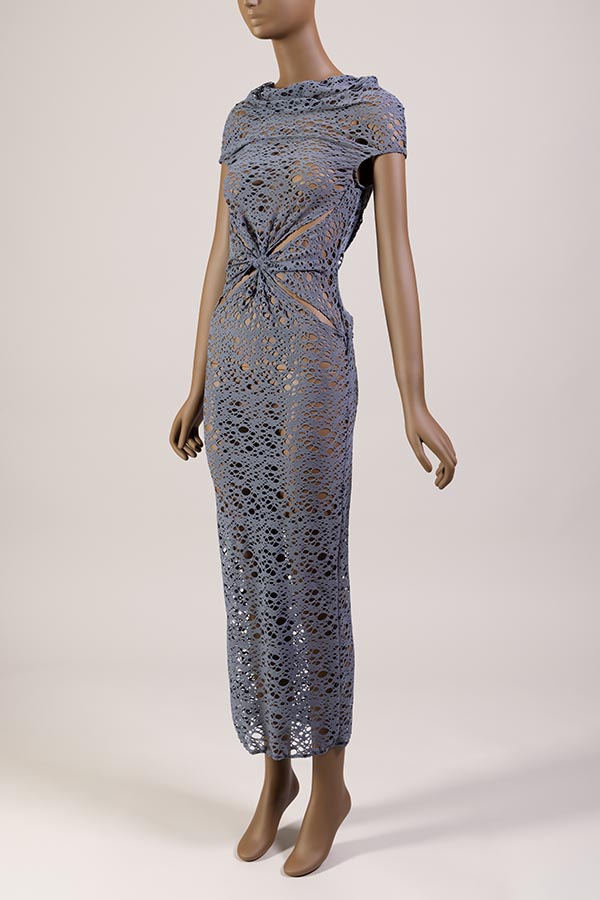
Fashion can be used to support or challenge traditional ideas of gender. Víctor Barragán's
lace dress, for example, presents female sexuality as resistance, paying homage to
the 16th-century witches tortured and killed by the Catholic inquisition in what is
today Mexico.
This dress was on view in the 2023 exhibition Moda Hoy! Latin American and Latinx Fashion Design.
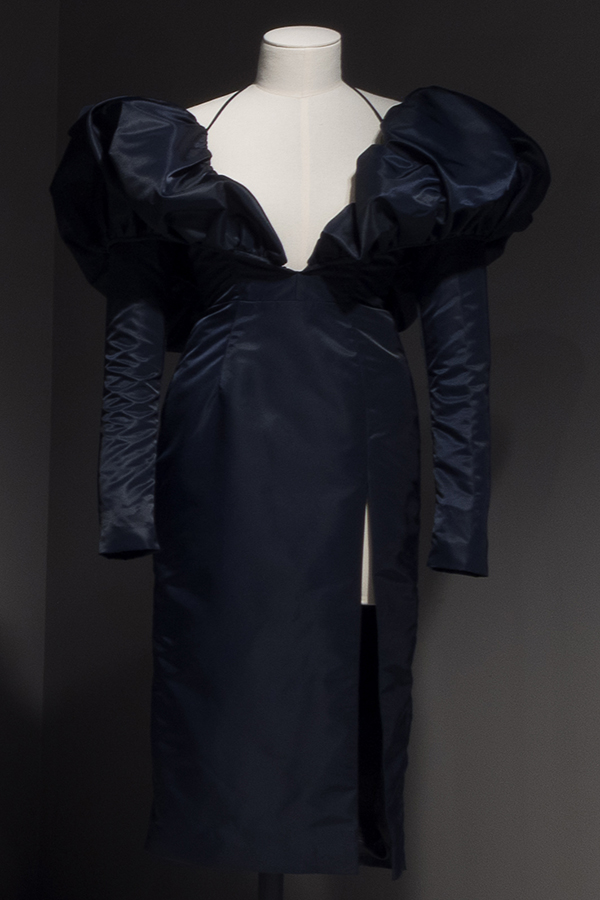
In July 2022, Vogue announced that "The puff-sleeve trend is here to stay." LaQuan Smith's original take
on the style layers a voluminous, capelet-like bodice over a tailored dress. The result
blends the designer's signature body-conscious silhouette with a sense of volume and
airiness.
This dress was on view in the 2024 exhibition Statement Sleeves.
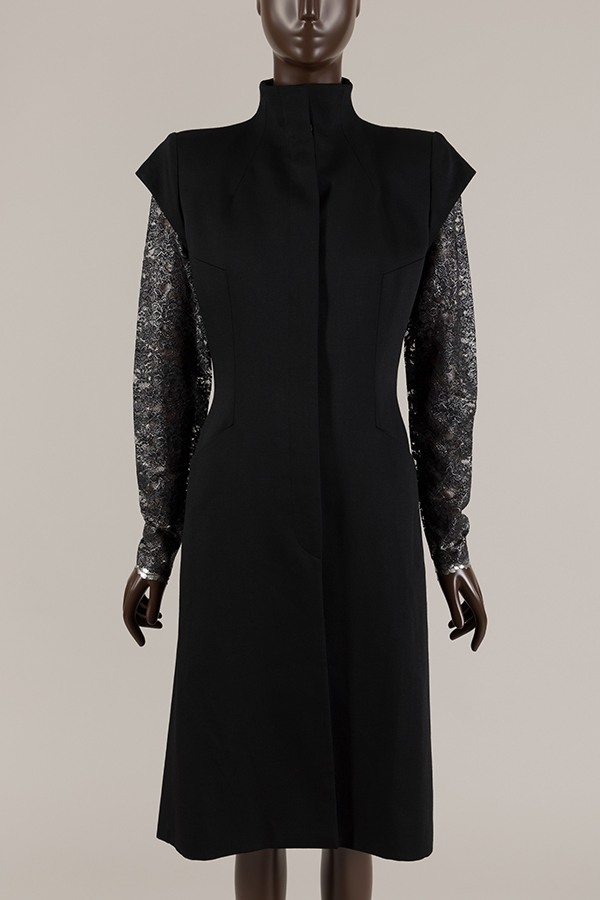
During his lifetime, Lee Alexander McQueen was often accused of misogyny, because
of the savage themes he explored in his work. However, some Lacanian-influenced theorists
have argued that McQueen's fashions are empowering because they refuse to inscribe
women's sexuality within the Symbolic "law of the father." McQueen's collection, Joan, was devoted to Joan of Arc, a cross-dressed warrior. Not only did she go into battle
dressed as a man, but she also reverted to wearing men's clothes in prison. She was
executed as a heretic, and later honored as a martyr.
This coat was on view in the 2025 exhibition Dress, Dreams, and Desire: Fashion and Psychoanalysis.
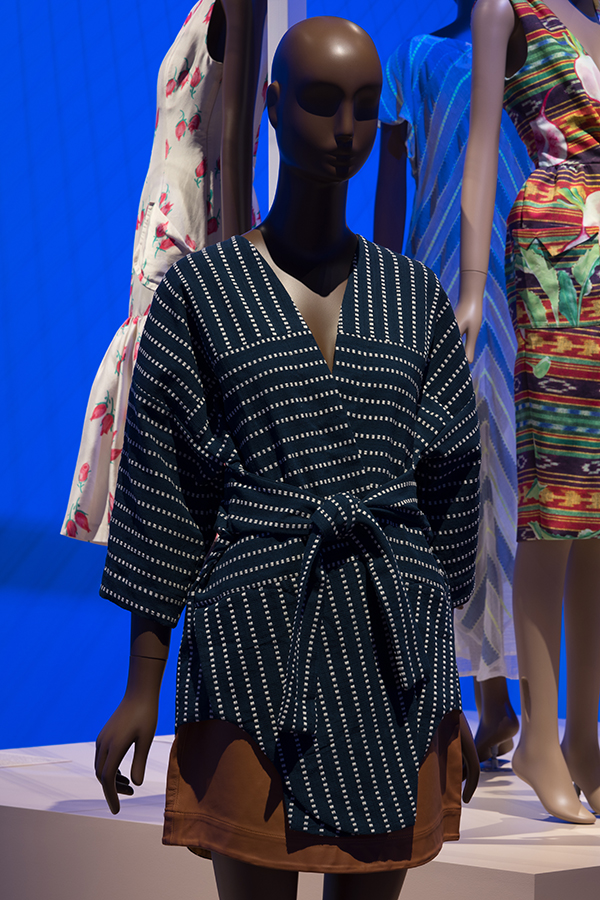
Katungulu Mwendwa's designs reflect her deep interest in African craftsmanship and
historical aesthetics, interpreted in modern ways that are authentic to her refined
vision. Although she takes direct inspiration from cultures across the continent,
her edited designs have been accused of being "not African enough." This ensemble
is inspired by a circa-1900 photograph of a Swahili woman in Zanzibar. It is made
from local Kenyan leather and cotton woven by artisans in Burkina Faso in partnership
with the women-owned and -led weaving cooperative Commerce, Artisanat pour le Bien
Etre Social (CABES) and the United Nations' Ethical Fashion Initiative.
This jacket was on view in the 2024 exhibition Africa's Fashion Diaspora.
Below are the types of objects in the collections of The Museum at FIT.
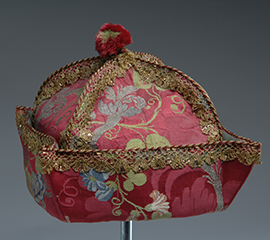
The accessories collection consists of approximately 15,000 objects that date from the mid-17th century to the present day. The collection has a particularly strong emphasis on designer accessories from the second half of the 20th century.
* The accessories collection is supported by the Solomon-Sloan Endowment Fund, which was established in 2005 to facilitate the acquisition, conservation, documentation and exhibition of accessories.
* The footwear collection contains more than 4,000 pairs of shoes, boots and sandals. It includes examples by designers such as Manolo Blahnik, Roger Vivier, Herbert Levine, and Salvatore Ferragamo.
* The millinery collection contains more than 3,000 hats by famous milliners such as Caroline Reboux, Lilly Daché, Halston and Philip Treacy. There are also many examples from designers such as Christian Dior, Balenciaga and Jacques Fath.
* The handbag collection includes fine examples by luxury houses such as Hermés and Gucci as well as examples by Roberta di Camerino, Judith Leiber and Bonnie Cashin for Coach.
* Other accessories include fans, gloves, belts, hosiery and costume jewelry.
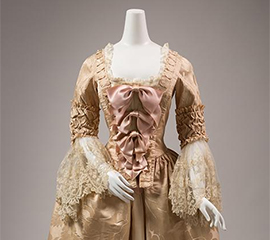
The Costume Collection consists of more than 50,000 objects dating from the mid-18th century to the present. The strength of the collection lies in its 20th-century holdings and, particularly, in couture and ready-to-wear women's clothing.
* The costume collection includes fashion by designers such as Azzedine Alaïa, Balenciaga, Chanel, Comme des Garçons, Dior, Galanos, Halston, Charles James, Norell, Paul Poiret, Yves Saint Laurent, and Vivienne Westwood.
* The Halston Archives and Study Room hold designs, patterns, and related records documenting this important designer's life work.
* The menswear collection features some 2,000 garments ranging from formal to activewear, including suits, coats, vests, and uniforms.
* Also included are swimwear, lingerie, outerwear, and knitwear.
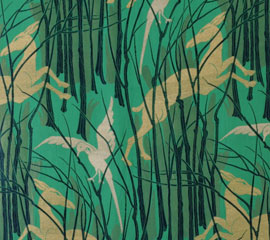
The Textile Collection consists of more than 30,000 textiles dating from the fifth century to the present, and includes the work of artists and designers such as Junichi Arai, Salvador Dali, Raoul Dufy, and William Morris.
* The textile collection includes apparel and home furnishing fabrics, embroideries, and shawls.
* The collection also includes a number of ribbon sample books.
* The J.B. Martin Velvet Room archives handwoven and production velvets spanning a 125-year period.
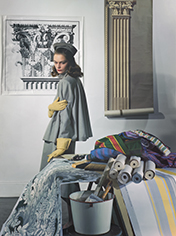
The Photography Archive features the work of fashion photographers Louise-Dahl Wolfe (1895-1989), who produced 86 cover images and thousands of interior shots for Harper’s Bazaar magazine, and John Rawlings (1912-1970), who had more than 200 Vogue and Glamour magazine covers.
Image: Louise Dahl-Wolfe photograph of model Sandra Payson. Featured in Harper’s Bazaar, March 1947, page 205, gift of Louise Dahl-Wolfe, 74.84.54
For those looking for the Herman Landshoff collection, the archive has been transferred
to:
Munchner Stadtmuseum
Sammlungsleiter Fotomuseum
St.-Jakobs-Pl. 1
80331 Munchen
The contact for the collection is:
Dr. Ulrich Pohlmann
Tel.: 089/233-22948
Fax.: 089/233-27969
email.: ulrich.pohlmann@muenchen.de